The key note address by Jeannette A. Bastian from Simmons Graduate School of Library and Information Science in Boston formally kicked off the ARCHIDIS intensive program 2012 this morning. The topic (cultural heritage, digital convergence and the archival perspective) did not concern appraisal directly, which, according to Bastian, was intentional on her part because appraisal, regardless of its importance in archival theory and practice, must be understood in a larger cultural and societal environment.

Digital convergence is a growing trend. More and more material is digitized, and we are seeing more and more collaboration between libraries, archives and museums (LAMs), although not without challenges. LAMs share many concerns, roles etc., but the traditions and approaches to theory and practice differ. Bastian’s experience is that the archivists, librarians and museum curators don’t really communicate, although they are all, to some extent, concerned with the same mission (cultural heritage). We need to recognize this and start to bridge the divide with a common understanding of the values of each profession’s theoretical and practical application if we are to achieve a continuing convergence between our institutions.

In parts of the key note Bastian presented concrete examples of certain cultural institutions that have had (parts of) their collections described and presented by students from Simmons College in dedicated websites, especially focusing on the challenges that the projects encountered. Funding and the economic aspect was (of course) an issue, but also the opposition to change. Many institutions worry that digital availability will stop people from physically visiting the institutions, and therefore might hesitate to develop extensive digital solutions.

The discussion at the end of the key note revealed an engaged and knowledgeable group of people, both students and teachers. We’re off to a good start!


To learn more on Simmons College’s resources, see also my most recent Pinterest addition :)


The students participating in the ARCHIDIS IP 2012 have been divided into groups and assigned group themes. My group will discuss the role of the archivist in appraisal. To get to know our group theme, each student is expected to write an essay on the group theme and make a summary of the essay available to the other students. The summaries will be used in the work that will be done during the IP.

Trine Nesland – summary of essay for ARCHIDIS IP 2012


Mandag 11. april 2012 arrangerte Kulturrådet fagdagen «Digital dugnad og dialog» med fokus på brukermedvirkning, brukerbidrag, Wikipedia og nye roller. Interessante temaer!!

Vibeke Mohr i Kulturrådet sparket det hele i gang litt over halv ti med å ønske alle kunnskapsdelere velkommen og presentere demokratisering av kulturarv og definisjonsmakt som dagens hovedfokus.

Svenske Lars Lundquist, fornyelsesbyråkrat fra Riksantikvarieämbetet snakket deretter om fordeler ved å ha wikipedianere in residence i institusjonene. Lundquist hadde flere gode poenger, særlig om hvordan overgangen fra det analoge til det digitale resulterer i nye forventninger, nye roller og ny adferd. Brukerne ønsker å bidra fremfor å være passive konsumenter. Det er primært holdninger som hindrer oss i å få dette til (ikke teknikken). Tap av kontroll er et element i dette – vi må tørre å gå bort fra det tradisjonelle informasjonsforvaltningsregimet og bli mindre synlige hvis vi skal kunne være tilstede på arenaene der brukerne er, f.eks. på Wikipedia.

Lundquist ble etterfulgt av nederlandske Lodewijk Gelauff fra Wikimedia i Nederland. Gelauff forklarte hvordan wikipedianerne ikke er en crowd, men et fellesskap av mennesker som alle jobber mot samme mål – kunnskapsbygging og -deling. Han beskrev også en del wikipediaprosjekter, blant annet «Wiki loves monuments», som er en slags bildeinnsamlingskonkurranse. I forbindelse med prosjektet «Wiki loves art» trakk han frem hvordan det å få med de store institusjonene har vært en forutsetning for suksess.

Sigurd Nielsen presenterte deretter Hedmark fylkeskommune og Glomdalsmuseets prosjekt «If you want to sing out, sing out», som presenterer minoriteters immatrielle kulturarv gjennom digitale fortellinger. Det er viktig å være bevisst på hvem som er målgruppen for de digitale fortellingene, og også være klar over at denne typen prosjekter er svært arbeids- og ikke minst kompetansekrevende.

Fra Stavanger kunstmuseum fortalte Helga Nyman om prosjektet Kunst-o-meter. Kunst-o-meteret er en boks av typen gammel passfotoboks, der museumsbesøkende kan gå inn og dele sine umiddelbare reaksjoner på et bestemt stykke kunst. Prosjektet har resultert i en film som var fantastisk bevegende og morsom å se! Hensikten med prosjektet er å senke terskelen for omtale og samtale om kunst og å bruke enkeltpersoners beskrivelser av sine møter med kunsten i formidlingen av den til andre besøkende. Jeg synes dette innlegget var det mest inspirerende, og kan se for meg at konseptet også vil kunne brukes i andre sammenhenger for å inspirere og engasjere. Det er utvilsomt mange muligheter i dette for abm-institusjonene, men også, kan tenkes, for forskere som vil formidle kvalitative funn eller i næringslivet når man ønsker å skape positive holdninger til nye prosjekter eller temaer.

Popstad Lunds Sofie Bergkvist tok oss så inn i popens verden, i alle fall den delen som for noe tid tilbake var tone(!)angivende i byen Lund. Her var det særlig Facebook som la føringer for utstillingen, ved at gruppen som ble opprettet i sakens anledning fungerte som «høringsinstans» for bidrag og ønsker.

Til slutt kunne Riksarkivets Ole Gausdal fortelle om Digitalarkivet og Digitalpensjonatet. Han trakk særlig frem verdien av at brukere gis anledning til å hjelpe og dele med andre brukere, og hvordan dette kan spare institusjonenes ressurser, men også gi verktøyene en ny dimensjon – allemannseiedimensjonen.

Avslutningsvis oppsummerte Kulturrådets Gunnar Urtegaard dagen ved å trekke frem hvordan vi nok bare har begynt å pirke så vidt borti disse tingene. Vi beveger oss i retning av mer og mer digital tenkning, men veien blir til mens vi går. Det er tydelig at den personlige stemmen blir mer og mer representert i institusjonene, samtidig som det blir mer og mer vanlig at fakta- og kontekstinformasjon gjøres allment tilgjengelig gjennom f.eks. Wikipedia. Og: Det er i økende grad brukerne selv som gjør jobben!


Dette har vært en interessant dag. Det er spennende å være vitne til en nærmest unison kursendring både i næringslivet og i det offentlige – særlig i kulturinstitusjonene. Vi går i retning av mer åpenhet, deling, samskaping og felles engasjement. Fortsettelsen blir spennende!


In preparation for the ARCHIDIS IP 2012: a somewhat unstructured review of Ian Johnston’s article titled «Whose History is it Anyway?» published in the Journal of the Society of Archivists, Vol. 22, No. 2, 2001.

The author
Ian Johnston has written the article as a representative of the Brent Archive in the UK (that holds collections related to the London Borough of Brent), and, it seems, as a connoisseur (and critic) of the acquisition practices in both the UK and the USA.

Summary
The article sets out to «examine how the archive profession has addressed the notion of representation, focusing particularly upon the area of acquisition policies». It advocates that the archive profession to a greater extent needs to adopt Howard Zinn’s concept of the «activist archivist», and work against the pull, as Verne Harris puts it, to create a more inclusive collection practice and thereby ensure that our archives represents all groups of society, not just the privileged and the powerful.

Acquisition status
The current and past acquisition situations in the USA and UK are discussed at length in the article. The main impression is that the USA is moving in the right direction whilst the UK is lagging behind, perhaps due to the somewhat unwilling UK archivists who, supposedly more than their American colleagues, continue to embrace the Jenkinsonian custodial attitudes. Furthermore, Johnston points out that the efforts to change the status quo have been too broad on paper and too narrow in actual action.

Although not a theme in Johnston’s article, I’d like to point to some initiatives in Norway that relate to the discussions that Johnston addresses. In 2004 the Oslo City Archives started a project whose mission was to collect archives from various multicultural groups in Oslo. Head of the project, Ellen Røsjø, explains in a recently published article on the subject, that the reason for starting the project was a recognition that Oslo’s minorities were underrepresented in the public archives and that when they did exist, they were mainly portrayed as welfare collectors or other lower standing groups in society. Oslo City Archives therefore set out to collect archives from minority organizations and religious communities. They also interviewed selected members and leaders of these communities and organizations to complement the archives. A similar project was conducted in the region of Oppland in 2008, where the Oppland Archives recognized that their holdings did not document the lives of those who had (more or less recently) immigrated to the region. Interviews were also conducted in this project.

Oral representation
Johnston discusses the need to «acquire non-documentary materials, particularly oral history, as a record of elements of culture which do not generate their own documentation.», pointing out that literacy traditionally has been a privilege. We have to move away from the perception that if something is not written down, it does not exist and therefore need not be archived.

Field work
The value of field work in acquisition practices is highlighted using various examples. Johnston also addresses – and I found this part enlightening – the possibility of creating a virtuous circle when field work makes targeted groups more aware of the potentials of the archive, thus resulting in more material being (created and) deposited.

Conclusion
Johnston concludes that there is still a need to embrace the concept of the activist archivist, if we wish to have a more complete and representative documented heritage. Now, more than 40 years since Zinn’s comments and 10 years since Johnston wrote his article, the term activist archivist is more current than ever, at least in the USA, and recently used in a New York Times article about the archivists who are attempting to document the Occupy Wall Street movement).


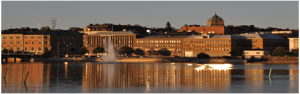
The Archives and Records Challenges in the Digital Information Society (ARCHIDIS) Intensive Program (IP) is administered by the North-Western European Archival Educators Network, and (at least in 2012) funded by the EU (Erasmus Intensive Learning Programmes). The IP takes place in Härnösand in Sweden. I’m one of the students attending this years’ summer school.

Storgatan in Härnösand

The ARCHIDIS IP will confront the challenges of creating, capturing, managing and preserving corporate and social memory in our digital information society. The attendees are student and faculty from several different countries and learning institutions in Europe. The students are divided into groups that will study different themes. My group theme is «The role of the archivist in appraisal». Should be interesting!

In preparation for the summer school the students will write an essay discussing the group theme and interact with other students and teachers on the digital learning platform Moodle. I’ll try to post updates from my preparations, and of course also tweet during the summer school in august!